Product Designer
12+ Month Project
Hospitality, Event Management
12
Challenge
Before this project, Walter's Hospitality struggled with old ways of working. They used tools like spreadsheets, emails, and paper, which caused a lot of back-and-forth. This meant information was scattered, different teams couldn't easily share updates, and many tasks had to be done by hand.
Results
The most immediate and important benefit of the new platform is the expected reduction in time spent on manual tasks.
My Responsibilities
As the Product Designer for this project, which lasted 12+ months, I took ownership of key parts of the design process.
My main responsibilities included leading the user research, driving the ideation phase, and creating the complete UI design for the new event management platform.
Challenge
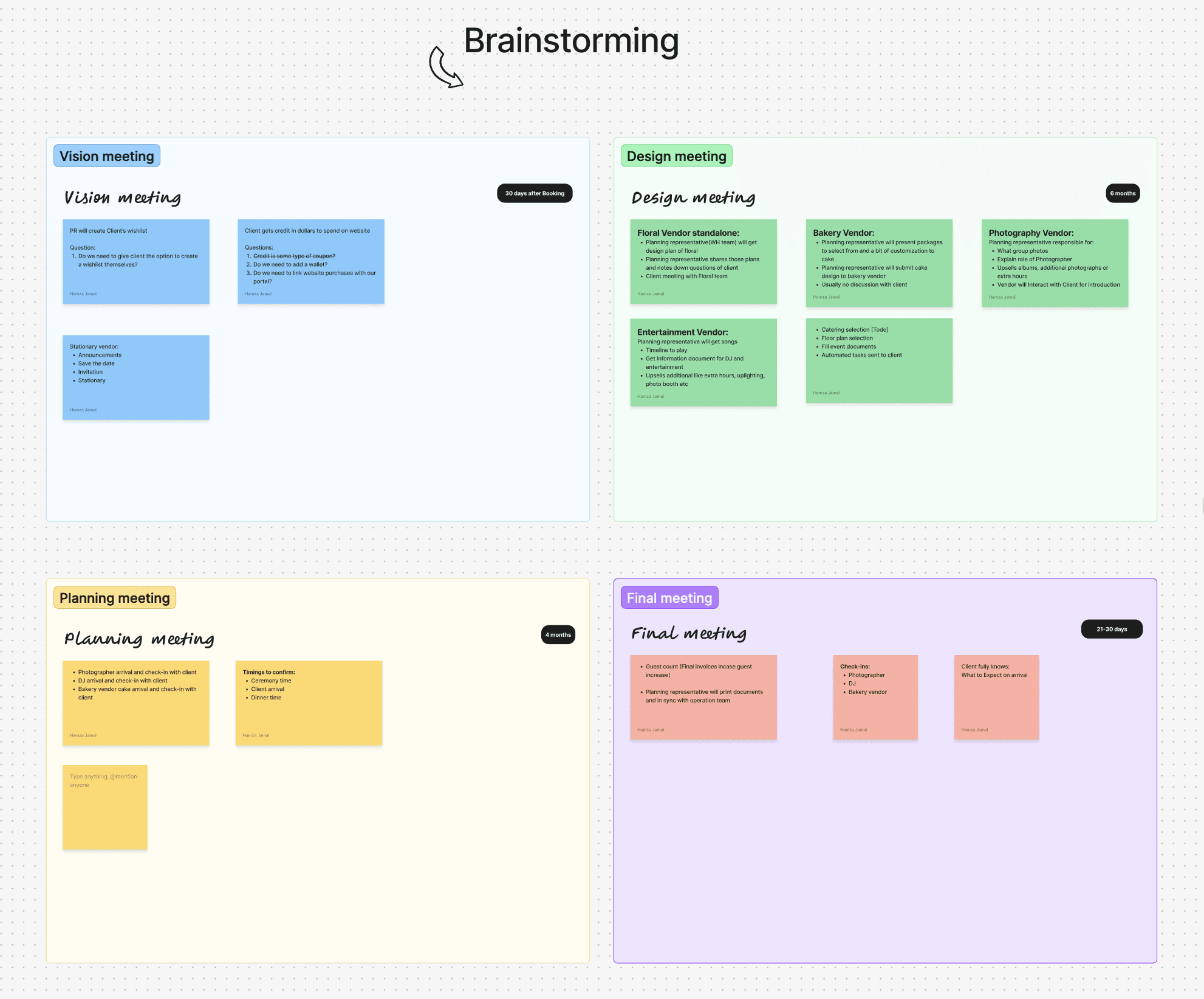
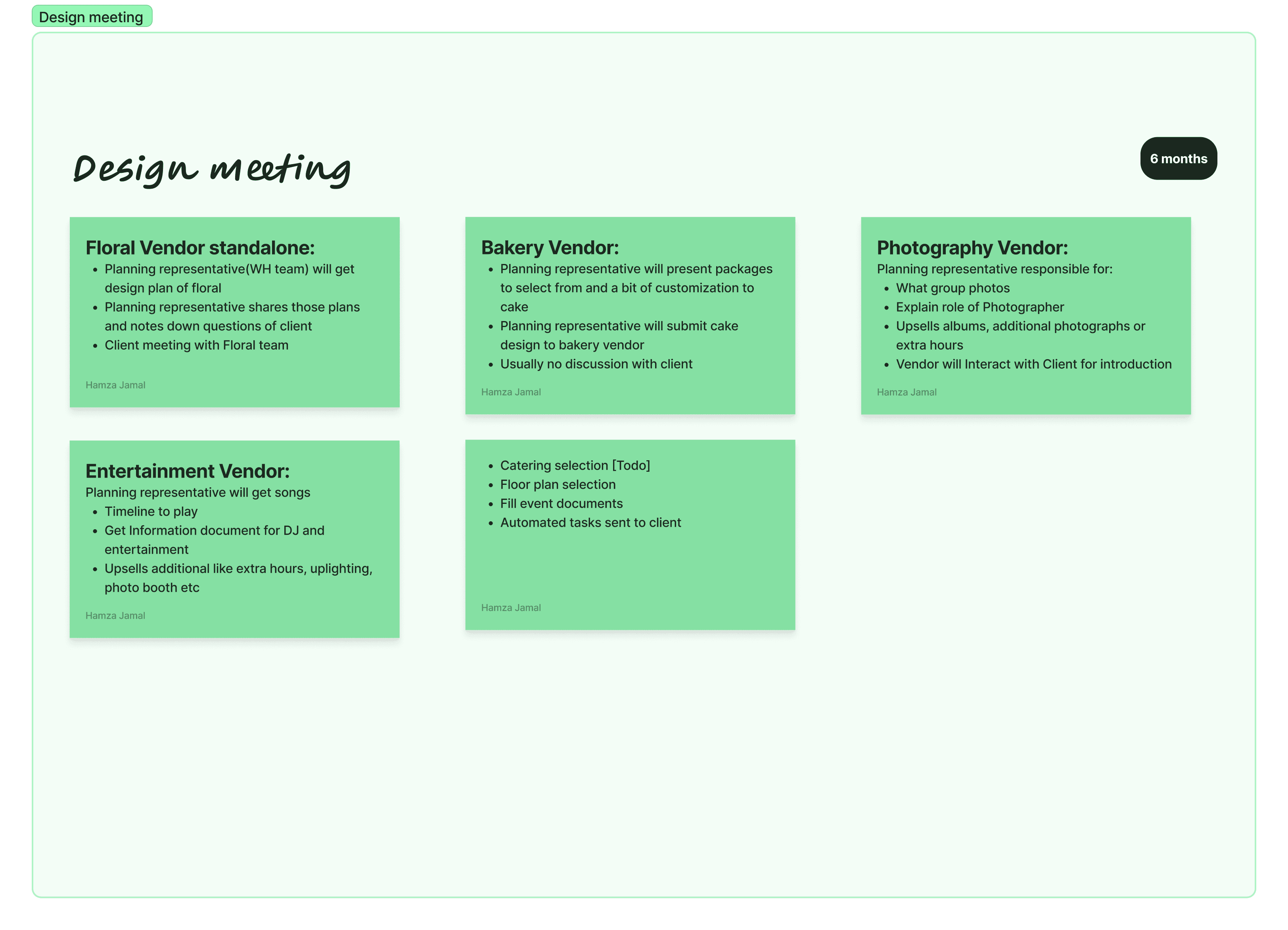
Walter's Hospitality faced several big problems that slowed them down and affected client happiness. A major issue was their messy and inconsistent way of managing vendors. This caused delays in event planning and led to different experiences for clients. I learned how their 4 major meeting plan works.
“Key findings showed that a single solution wouldn't work for all vendors. For instance, the floral vendor with pre-designed packages didn't need extensive inventory fields, while the custom floral vendor desperately did.”
Design Decisions
I conducted one-on-one interviews with Walter's event planners, administrative staff, and key vendors.
To handle the varied ways different vendors work (like florists, caterers, photographers), I created a modular vendor profile system. This design allowed each vendor type to set up its specific data fields, services, and communication methods.
Synthesizing Complex Information
To turn the large amount of information from interviews and research into clear insights, Miro was an essential tool. This digital whiteboard helped us organise raw observations into meaningful conclusions.
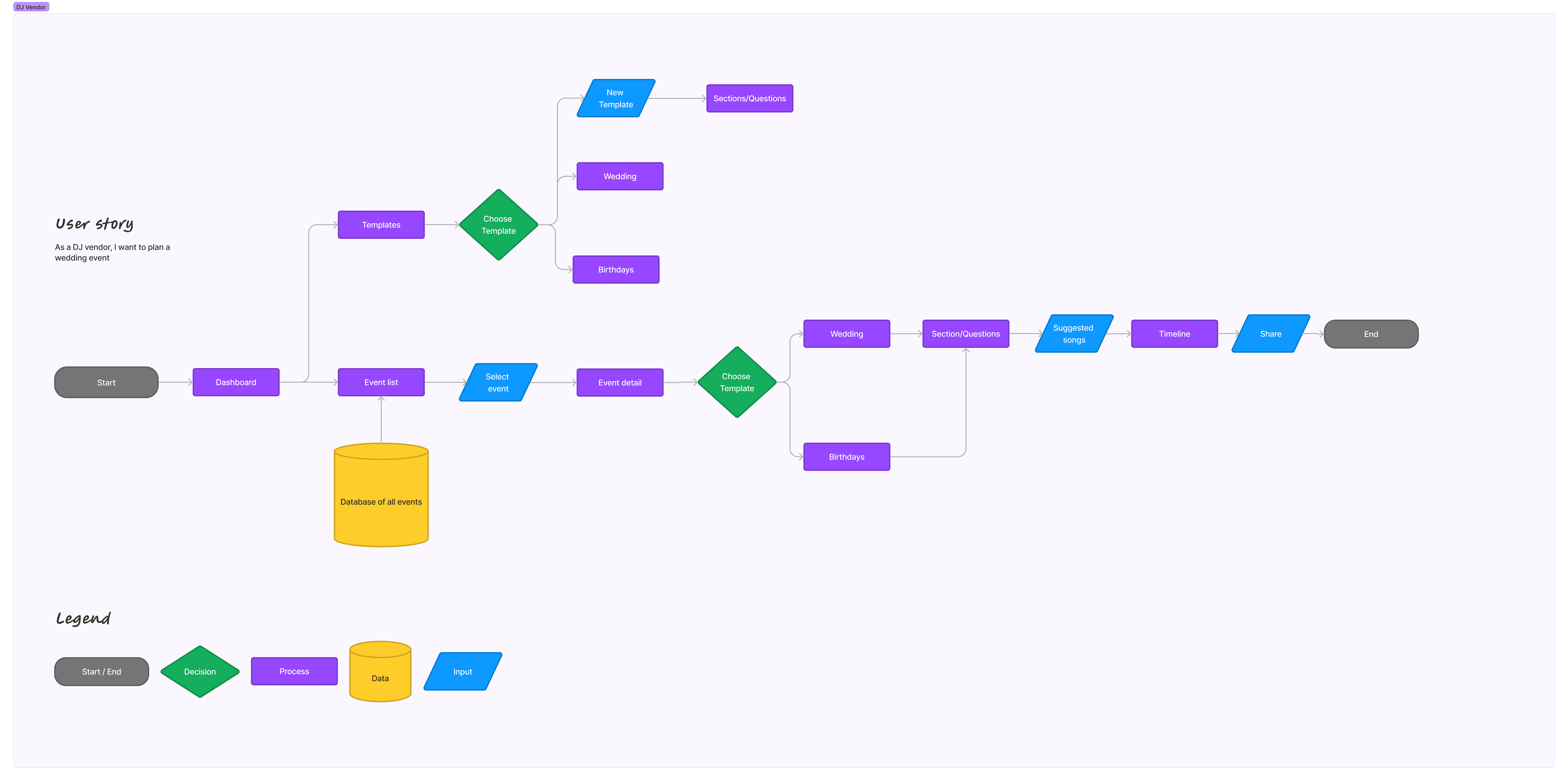
CRM - Multi-user profile management
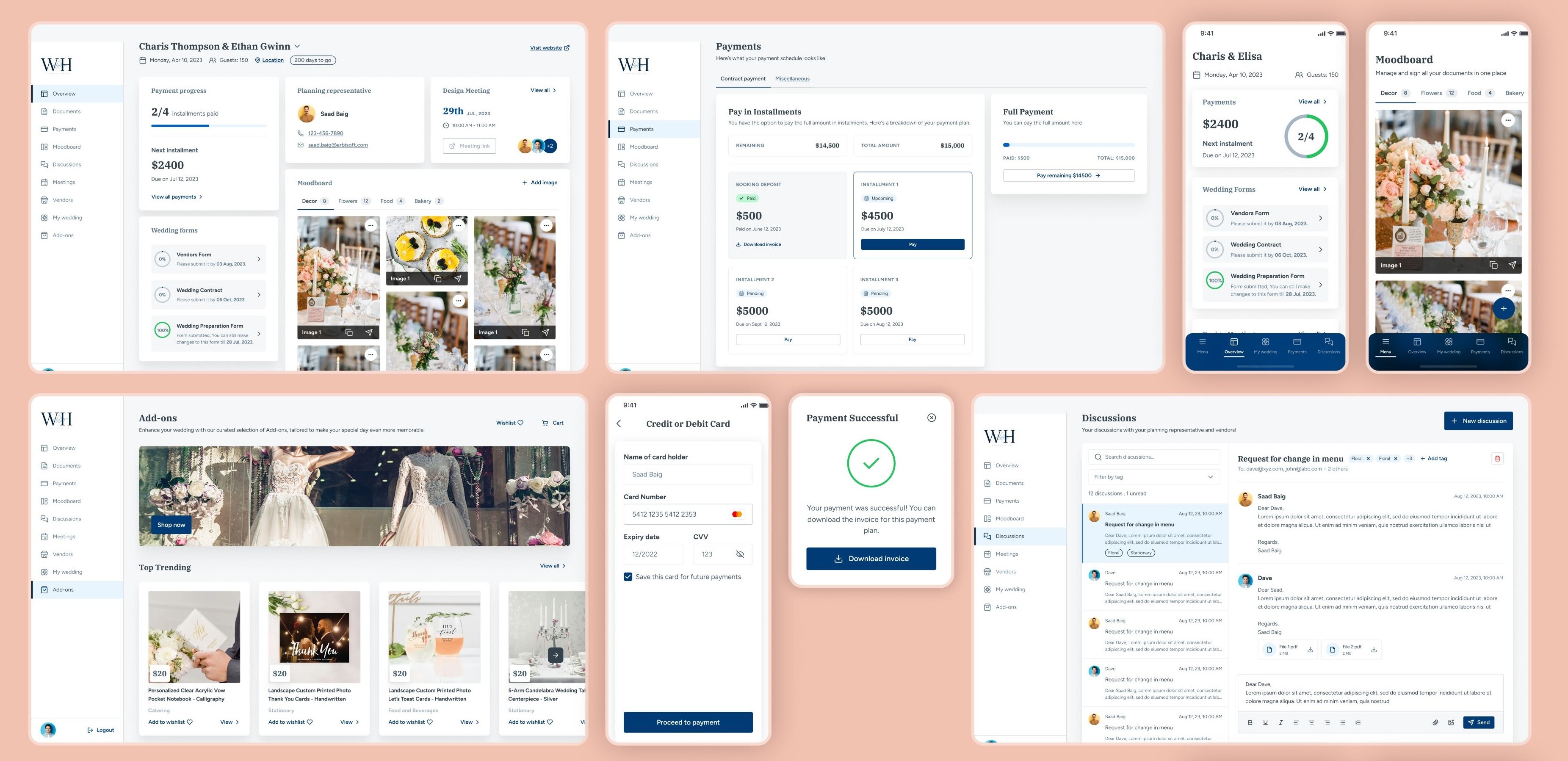
I created an end-to-end flow for each user and showed the prototypes to each vendor by letting them use their own portal.
This is an extensive platform where I dig deep into each use case and curated a personalised experience for every user, including admin, staff, and all vendors.
Reports
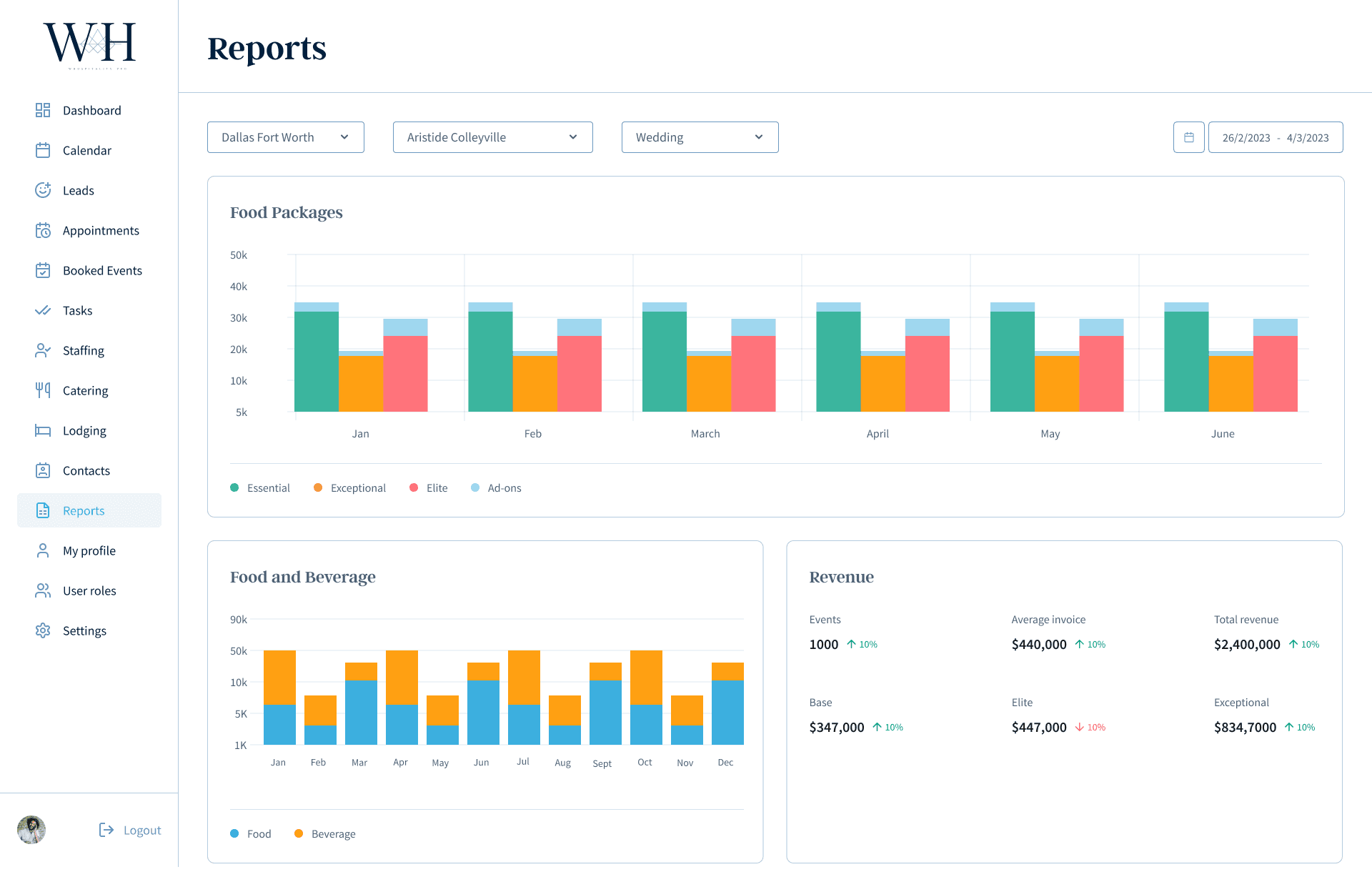
After identifying the major things the analytics team wants to track, I created a reports page that shows revenues and packages.
Conclusion
Working on Walter's Hospitality's platform taught me a lot about complex enterprise design. A key learning was how to handle and bring together conflicting needs from different teams. This experience showed me that good product design in complex settings needs strong communication and the ability to build agreement, not just technical skills.
Potential Next Steps
Advanced Analytics & Reporting
Mobile App for Event Day Management
Integration with Event Tools
AI-Powered Features